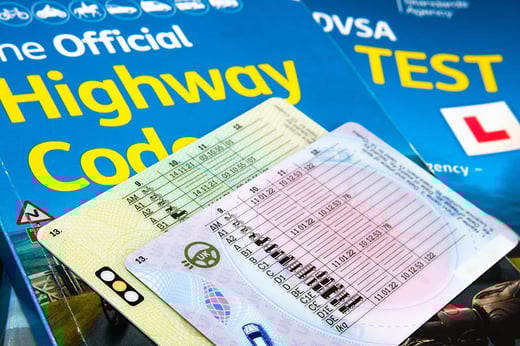
Once you’ve moved to the UK, it’s likely that you will have to get to grips with a whole new system of driving and often that means relearning some habits once you get behind the wheel.
While the fundamentals of driving may feel familiar, the rules, expectations and enforcement in the UK can differ in ways that regularly catch new residents out. This article explains how driving works once you arrive, the parts of the Highway Code that matter most if you have driven elsewhere and how insurance fits into the picture.
Disclaimer
This article is for general information only. Driving rules change regularly, licence requirements and insurance obligations can vary depending on your circumstances. Our UK car insurance partners, Marshmallow, have helped us write this guide. If you’re looking for a quote for car insurance, they might be able to help: https://www.marshmallow.com/
Please note that this is an affiliate link, so if you proceed with any insurance we will receive a small fee as a result.
Driving in the UK once you arrive
In the UK, vehicles drive on the left-hand side of the road.
For people arriving from right-hand-drive countries, this is the most obvious adjustment, but it is rarely the most difficult. UK roads are often narrower, more congested and more tightly regulated than in many other countries, particularly in towns and cities.
Manual transmission vehicles are still common, parking restrictions are widespread, and enforcement is largely automated through cameras rather than police stops.
As a result, many penalties are issued days or weeks after an incident rather than at the roadside.
Your driving licence and residency
Whether you can continue to drive on a foreign licence depends on where it was issued and your residency status. Many new arrivals can legally drive for a limited period after arriving in the UK, but this is not indefinite.
Once you are considered resident, different rules apply than if you were simply visiting.
Residency is not about nationality. It is about where you live. If you have moved to the UK to work, study or settle, you should assume that your licence position will need reviewing sooner rather than later. In some cases, licences can be exchanged. In others, a UK driving test is required.
Failing to regularise your licence status can invalidate your insurance, even if you were legally insured on paper.
Highway Code rules that commonly surprise new residents
The UK Highway Code sets out not just legal requirements, but also expected behaviour. Many of the issues new residents face come from misunderstanding priority or assuming that informal driving customs from elsewhere apply.
Roundabouts
Roundabouts are extremely common in the UK, including multi-lane and high-speed versions. Traffic already on the roundabout has priority. Lane discipline matters, and signalling is expected when exiting. Cutting across lanes or failing to indicate is a common cause of accidents and insurance disputes.
Pedestrian crossings
Pedestrians have strong legal protection in the UK. At zebra crossings, vehicles must stop once a pedestrian has stepped onto the crossing. At traffic-light-controlled crossings, enforcement cameras are common and penalties for non-compliance are strict.
Recent updates to the Highway Code also place greater responsibility on drivers to protect more vulnerable road users, including pedestrians and cyclists.
Speed limits
UK speed limits are based on road type, not just signage. A national speed limit sign does not mean the same speed on all roads. For example, the limit differs between single-carriageway and dual-carriageway roads, and can change depending on the type of vehicle you are driving.
Speed cameras are widespread and tolerance is low. Many drivers receive penalties without realising they were speeding.
Yellow box junctions
You must not enter a yellow box junction unless your exit is clear. Stopping in a yellow box, even briefly, is an offence and is heavily enforced in cities such as London.
Mobile phone use
Using a handheld mobile phone while driving is illegal in the UK. This includes when stopped at traffic lights or in traffic. Penalties are severe and include fines, points on your licence and, for new drivers, loss of licence.
Flashing headlights
Flashing headlights in the UK is a warning signal, not an invitation. Using them to indicate that someone can proceed is discouraged and can create liability if an accident occurs.
Learning the Highway Code
In the UK, part of the driving test is a driving theory test which needs to be taken and passed before a new license is issued.
As part of this, there are a number of apps available which help people pass the theory test, and include all the information you need and are always kept up to date.
The best way to stay familiar with the Highway Code is to get one of these apps, one of which is the official DVSA Theory Test Kit (https://www.gov.uk/theory-test/revision-and-practice) but other apps are available.
Car insurance is a legal requirement
In the UK, it is illegal to drive or even keep a vehicle on a public road without insurance. This applies whether you own the car outright, have borrowed it, or are only driving occasionally.
Insurance is linked to both the driver and the vehicle. If you drive a car without being correctly insured for that vehicle, you are driving illegally, even if the owner is insured themselves.
The legal minimum level of cover is third-party insurance, which covers damage or injury you cause to others. Many drivers choose more comprehensive cover, but the key point for new residents is that insurance must be valid at all times.
Insurance and foreign driving history
One of the biggest surprises for people moving to the UK is how insurance pricing works. Driving experience from abroad is not automatically recognised and insurers vary widely in how they treat overseas licences and claims history.
This means that experienced drivers may initially face higher premiums than expected. Over time, building a UK driving and claims record typically improves this, but assumptions based on how insurance works in other countries often do not translate directly.
It is also important to understand that if your licence is no longer valid for UK driving, your insurance may be invalid even if your policy appears active.
Getting insured with no UK driving history
Our UK car insurance partner, Marshmallow, is a UK-regulated car insurance provider offering motor insurance policies online and via a mobile app. It operates within the UK insurance framework and provides fully comprehensive car insurance, which covers damage to other people and their property as well as damage to the insured vehicle, along with protection against theft and fire.
All Marshmallow policies are annual, with the option to pay monthly or annually. As with all UK insurers, drivers must be UK residents and hold a driving licence that is valid for use in the UK. Insurance is legally required before a vehicle can be driven on public roads, and the coverage applies to both the driver and the specific vehicle insured.
Unlike many UK insurers, Marshmallow takes overseas driving history into account when assessing risk. This means experienced drivers who are new to the UK are not treated the same as drivers with no prior history. Any discount applied varies by individual circumstances, but overseas driving experience is always considered as part of the pricing process.
Vehicles, tax and MOT
In the UK, three separate requirements apply to most vehicles:
- Insurance
- Vehicle tax
- MOT, the annual roadworthiness test for older vehicles
These are checked electronically through number plate recognition systems. It is possible to be compliant in one area and non-compliant in another, which can still result in fines, penalties or the vehicle being seized.
Practical points before you drive regularly
Before driving regularly in the UK, new residents should ensure they understand:
- Whether their licence is valid for their current residency status
- That they are correctly insured for the specific vehicle they are driving
- That the vehicle is taxed and, if required, has a valid MOT
- Local parking rules, permits and restrictions
Most problems arise not from poor driving, but from assumptions that rules work the same way as elsewhere.
Checklist for driving as a new UK resident
Before you drive
- Confirm whether your foreign driving licence is valid for use as a UK resident and for how long
- Check whether your licence can be exchanged or whether a UK driving test will be required
- Ensure you understand that residency, not nationality, determines the rules
Insurance
- Arrange valid UK car insurance before driving or parking on a public road
- Confirm that you are named on the policy for the specific vehicle you will drive
- Check that your licence status is accepted by the insurer, as invalid licences can void cover
- Get a quote from Marshmallow who have policies to help new UK arrivals get insured: https://www.marshmallow.com/ (Please note that this is an affiliate link, so if you proceed with any insurance we will receive a small fee as a result)
Vehicle compliance
- Make sure the vehicle is insured, taxed and MOT-tested (if applicable)
- Confirm that all details are correct on the vehicle registration
- Understand that enforcement is automatic through number plate recognition
Highway Code basics
- Drive on the left-hand side of the road
- Understand roundabout priority and lane discipline
- Know the rules for pedestrian crossings, especially zebra crossings
- Understand how speed limits work by road type, not just signage
- Do not stop in yellow box junctions unless your exit is clear
- Never use a handheld mobile phone while driving, even when stationary
Everyday practicalities
- Learn local parking restrictions, permits and signage
- Understand that flashing headlights are a warning, not an invitation
- Be aware that undertaking is generally discouraged and can lead to liability
- Allow extra time while adjusting to road layouts and driving style
Ongoing
- Keep insurance, tax and MOT continuously up to date
- Review your licence and insurance position if your residency status changes
- Familiarise yourself with updates to the Highway Code, particularly those affecting pedestrians and cyclists
Useful links
Marshmallow Car Insurance: https://www.marshmallow.com/