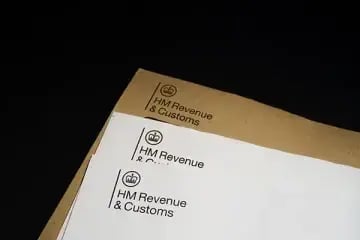
Receiving a letter from HMRC mentioning overseas income, foreign bank accounts or offshore assets can be unsettling and can often lead to understandable panic.
When a nudge letter arrives, it’s common for the recipient to believe they have done something seriously wrong, while others convince themselves the letter can simply be ignored. Increasingly, we’re seeing people turn to AI to interpret the wording or even draft a response, even before fully understanding why the letter was sent in the first place.
The first thing to know is that HMRC nudge letters sit somewhere between a reminder and a warning and are usually sent because HMRC believes there may be undeclared overseas income, gains or reporting obligations. This belief will have been established based on information HMRC has received through international data sharing agreements, financial institutions or other sources.
In cases we see, the letter has uncovered years of misunderstanding around residency, overseas savings, foreign pensions, inherited assets or international investments. Importantly, many of the people receiving these letters are not deliberately hiding money offshore.
Before coming up with a response, it’s essential to understand the context and to avoid panicking unnecessarily.
A poorly drafted reply, incomplete disclosure or inaccurate explanation can create additional problems later, especially if HMRC subsequently opens a formal enquiry.
This is one of the reasons tax advisers are increasingly cautious about people relying solely on AI-generated responses. AI can help explain terminology or organise information, but it does not understand the full context of your tax history, residency position, documentation or legal exposure.
This article provides an overview of HMRC nudge letters, some examples of enquiries we’ve received and hopefully helps you avoid any sense of panic, offering a path to resolve any difficult situation you may find yourself in.
Disclaimer
This article is intended as general information only and should not be considered tax advice. HMRC nudge letters can relate to complex tax, residency and reporting issues involving multiple countries. Every situation is different and the correct response will depend on your personal circumstances, residency status, source of income and historic reporting position. Experts for Expats can introduce you to an independent international tax specialist for personalised support.
What is an HMRC Nudge Letter?
An HMRC nudge letter is typically an informal compliance letter encouraging someone to review their tax affairs. It is not a random letter, like you might receive from the TV licensing company. It is specific and relevant to you.
The letter may reference any one or more of the following:
- Overseas income
- Foreign bank accounts
- Rental income from property abroad
- Capital gains
- Offshore trusts or investments
- Cryptocurrency activity
- Foreign pensions
- Interest or dividends received overseas
The wording is often deliberately non-accusatory. HMRC usually asks the recipient to review their position and either confirm compliance or correct any inaccuracies.
However, these letters should not be dismissed as harmless administrative correspondence. HMRC already holds information from overseas financial institutions through international reporting systems such as the Common Reporting Standard (CRS). The purpose of the letter is often to encourage voluntary disclosure before HMRC escalates matters with a more serious investigation into your financial situation.
According to Laura Sant, UK tax adviser at LSR Partners, one of the biggest mistakes people make is assuming they already know what HMRC is referring to:
“If you are unsure why HMRC have sent you a nudge letter, you can contact them to find out why. They will normally be able to tell you the source of their information and any associated amounts of income and disposal proceeds associated with potential gains. We have found in certain instances that some clients have been made aware of money that has been paid into bank accounts that have not been in regular use, or monitored, for years, meaning that without contacting HMRC to identify what hasn’t been disclosed, their disclosure would have been incomplete.”
Is HMRC sending more nudge letters?
International tax and financial transparency has significantly changed over the last decade as financial institutions in different countries automatically exchanging account information with tax authorities. As a result of these developments, HMRC receives large volumes of overseas financial data every year, including information about:
- Account balances
- Investment income
- Interest payments
- Ownership structures
- Certain insurance products
- Some pension arrangements
In other words, overseas affairs were previously invisible to UK authorities are now much more visible, and there may be tax for HMRC to collect as a result.
Despite this increased visibility, HMRC data is not always complete or correctly interpreted and receiving a nudge letter does not automatically mean tax is owed to HMRC. However, it does usually mean HMRC believes something deserves explanation.
Given that there is the potential for a lot of owed and unpaid tax to be collected, HMRC is obviously keen to get to the bottom of cases and has therefore invested heavily in ensuring potential unpaid tax is investigated and collected.
Common situations which trigger nudge letters
While it might seem like HMRC nudge letters are only sent to individuals deliberately hiding money offshore, the enquiries we receive are often far more ordinary and less interesting.
The common factor in the enquiries we receive are that people are trying to establish whether they misunderstood complicated international reporting rules rather than trying to conceal assets.
We’ve collated a few common themes of nudge letter enquiries we’ve received so far in 2026.
“I thought it was just old savings”
In one enquiry received by Experts for Expats, the individual had lived and worked overseas for more than 40 years before returning to Britain. During that time they had accumulated savings in a foreign bank account which remained open after their return.
After receiving an HMRC nudge letter referencing overseas income and gains, their concern was immediate:
Had they accidentally failed to declare taxable income simply by transferring money from those overseas savings back into the UK?
The key facts which would need to be investigated may include:
- When the money was earned
- Whether the funds represented historic capital or current income
- Whether investment growth occurred after UK residency resumed
- Whether interest continued to arise overseas
- Whether any remittance or reporting rules applied
This is where AI-generated answers can become risky.
A generic response might incorrectly assume:
- All overseas money is taxable
- All transfers into the UK are reportable income
- That no issue exists at all
“The account was opened for me as a child”
Another enquiry involved an individual who moved to the UK for work and later received an HMRC letter concerning offshore income. Their overseas accounts had originally been opened by family members during childhood and generated relatively small amounts of foreign interest.
When they came to us, their primary concern was whether they had unknowingly failed to disclose something HMRC expected to see reported and therefore faced a penalty as a result.
These situations can become emotionally stressful very quickly because people often:
- Assume they must have done something wrong
- Search online or in AI for worst-case scenarios
- Become overwhelmed by technical language around offshore disclosure facilities and penalties
- Don’t get clear answers from AI which will tend to “hedge its bets”
Importantly, small overseas balances do not automatically mean major tax exposure exists and it’s essential to establish:
- What income arose (in this case, from interest)
- During which tax years
- Whether reporting thresholds applied
- Whether tax had already been paid overseas
- Whether HMRC’s information actually reflects the full picture
“Which box am I supposed to tick?”
Sometimes the stress comes less from the overseas income itself and more from the structure of the HMRC letter. We have seen numerous enquiries from people asking questions around:
- Which declaration option they should choose
- Whether acknowledging the letter creates legal exposure
- Whether they should admit uncertainty
- Whether responding incorrectly could trigger a formal investigation
This highlights an increasingly common problem in the current era of AI research in that information is easy to find, but interpretation of the information is difficult to establish.
As a result we see people who are trying to do things themselves, but struggling to determine:
- Which information applies to them
- What level of risk actually exists
- How to communicate with HMRC without accidentally oversimplifying their situation
A carefully drafted professional response is more than simply “using ChatGPT to write a letter” and more about ensuring the facts, timelines and disclosures are properly understood before anything is submitted to HMRC.
What happens if you ignore the nudge letter?
Ignoring an HMRC nudge letter is more likely to increase the likelihood of escalation because if HMRC believes there may be undeclared tax liabilities and receives no response, they may begin:
- Formal compliance checks
- Discovery assessments
- Calculating penalties and interest charges on late/missed payments
- Requests for extensive historic documentation
The longer uncertainty continues, the more stressful and expensive matters can become. Even where no tax is ultimately due, failing to engage properly can create unnecessary suspicion and ultimately stress.
What information should be gathered before responding?
When establishing the best next course of action, including the response to HMRC itself, it is sensible to gather all related information including:
- The original HMRC letter
- Relevant tax returns
- Residency timelines
- Overseas income records
- Bank statements
- Property sale documents
- Foreign tax assessments
- Pension documentation
- Investment statements
- Details of any previous advice received
If you respond without having all this information to hand, mistakes can easily be made and you can’t withdraw your initial response.
Rather than responding quickly, we believe that getting expert advice either through a consultation or engaging with a UK tax professional is the best next step.
Working with a professional who has assisted people respond to nudge letters is more likely to result in a positive outcome more quickly and calmly than rushing ahead alone.
HMRC are used to people asking for deadline extensions, especially when individuals are engaging experts to review their position to determine what the initial response to the nudge letter should be. As a result, these are normally granted, as long as the individual is being proactive about figuring out their position.
How to respond to a nudge letter
The correct response depends entirely on the circumstances, but a professional response will usually aim to:
- Acknowledge the letter
- Confirm the matter is being reviewed
- Clarify factual background
- Explain relevant residency or income issues
- Correct inaccuracies where appropriate
- Disclose omissions if necessary
- Demonstrate cooperation
- Avoid speculative or careless statements
It’s important to keep any response factual and ensure any emotion is removed. Aggressive responses rarely help, and vague or overly simplistic replies can create further questions. A carefully drafted response should balance cooperation with accuracy.
Could you use an AI generated response?
While we could share a suggested response, we believe that due to each situation being unique, the risk of people simply copying the content could lead to more problems.
For the same reason, we would not recommend proceeding with using an AI generated response. By engaging with a professional tax advisor, the wording of the response and information might include:
- The level of potential exposure
- Whether disclosures are required
- Whether penalties may apply
- The quality of available records
- Historic filing behaviour
- Whether HMRC's assumptions appear correct
Why AI responses can create problems
More and more people are pasting their HMRC letters into AI tools and asking for a draft response. There is nothing inherently wrong with using AI to understand terminology or organise thoughts, the risks arise when AI-generated responses are treated as professional advice.
When using a tool like ChatGPT, it’s important to remember that AI cannot independently verify:
- Whether your residency analysis is correct
- Which tax treaty applies
- Whether foreign tax credits are available
- How HMRC may interpret your wording
- Whether your explanation accidentally creates inconsistencies
- Which disclosures are legally required
- Whether additional filings should accompany the response
One of the biggest risks is oversimplification as international tax situations often involve details that appear minor but can fundamentally change the position.
For example:
- A pension may be taxable in one jurisdiction but still reportable in another
- A property gain may qualify for partial tax relief
- A foreign account may belong to a trust rather than the individual
- Temporary UK residence rules may apply
- Split year treatment may matter
- Remittance basis claims may affect historic obligations
AI tools do not independently assess evidence or professional risk, a human adviser does. HMRC have also confirmed that they will not accept reliance on AI as taking reasonable care with your UK tax affairs. Therefore, using AI and getting it wrong could end up costing you more in the long run.
How much does it cost to get assistance with HMRC nudge letters?
The cost of getting assistance depends on what needs to be checked before a safe response can be sent.
A simple review and response may cost from around £500 to £1,500 + VAT, while cases involving several tax years, unclear residency, overseas investments or possible disclosures can cost £2,000 to £5,000+.
The important point is that you are not usually paying someone to write a single letter. You are paying them to review the facts, identify whether HMRC’s concern is valid and make sure the response does not create avoidable problems.
This is why a reputable adviser may not give a fixed fee until they have seen the HMRC letter and understood your background.
When you’re considering getting professional assistance, a good starting point is to ask:
“How much review work is required before anyone can respond?”
That distinction matters because the quality of the analysis behind the response is usually far more important than the wording itself.
How Experts for Expats can help
Experts for Expats can introduce you to independent international tax specialists experienced in UK offshore compliance matters, residency questions and overseas income reporting.
An initial discovery conversation with one of our partners can help establish:
- Whether the HMRC letter indicates significant risk
- What information should be gathered
- Whether disclosures may be required
- Which jurisdictions need reviewing
- Whether specialist legal or tax support is appropriate and how much that would cost
Requesting an introduction and following up with a free discovery call with one of our partners can help you understand what might be suitable next steps, without any obligations to proceed.